
Health is the foundation of a vibrant, resilient community. In the fast-growing suburbs of Pune: Baner, Balewadi, Sus, Mahalunge, Pashan, Aundh, Someshwarwadi and Sutarwadi rapid urbanization has brought opportunity but also pressures on public health and emergency services. The Jayesh Murkute Social Foundation has placed health at the centre of its community work, combining emergency response, preventive screening, fitness campaigns and sustained public awareness to improve the wellbeing of citizens across the region.
This article looks at the Foundation’s multi-pronged health initiatives: what they do, how they do it, the partners who support the work, and how people can access services or join hands to expand impact.
Strengthening Emergency Response: Ambulances, Ventilators and Rapid Action
A timely medical response can mean the difference between life and death. Recognizing gaps in frontline emergency care, the Foundation has invested in strengthening immediate-response capacity in the locality. Key efforts include:
- Ambulance support and rapid-response coordination to ensure citizens can be transported quickly to medical facilities in emergencies.
- Donation of ventilator equipment to local medical associations such as the Baner–Balewadi Medicoz Association, a step intended to bolster the capacity of local clinics and first-response units. These resources are intended to improve critical-care readiness during sudden medical crises and reduce avoidable delay in lifesaving interventions.
Such investments are complemented by quick mobilisation during local emergencies (storms, accidents or other crises), where the Foundation works alongside local volunteers and administration to restore essential services and connect affected families to care.
Preventive Screening and the #60DaysChallengeWithJayesh
Prevention is central to sustainable health. The Foundation launched the #60DaysChallengeWithJayesh a focused preventive-health campaign designed to encourage citizens to know their health metrics and take early action. Through this initiative the Foundation organised free screening camps (in partnership with local medical associations and laboratories) offering tests and services such as:
- Basic blood tests (hemoglobin, blood sugar)
- Bone density screening
- Liver FibroScan and other targeted diagnostic checks where needed
- Skin examinations and general medical consultations
- Physiotherapy support and follow-up advice
These camps were structured to be inclusive and accessible: free or low-cost, publicised across local societies, and supported by local doctors and pathology labs. Where tests identified a concern, the team provided counselling, referral recommendations and, where possible, follow-up physiotherapy or basic treatment at the outreach location.
The goal of such screening is simple but powerful: identify risks early, connect people to care, and build a culture of routine health-check participation across families and age groups.
Blood Donation Campaigns: Sustaining the Lifeline
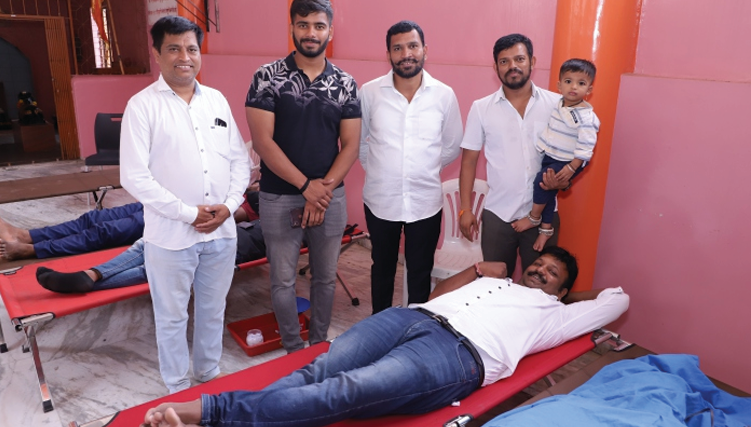
A steady blood supply is a public health necessity. Over recent years the Foundation has organised annual and periodic blood donation drives, building partnerships with hospitals and volunteer groups to create sustainable community donors’ networks. Highlights of this work include:
- Multiple successful blood camps organised consistently over the past years, drawing active participation from citizens, volunteers and community groups.
- Awareness efforts alongside drives to explain the importance and safety of blood donation, which helped bring first-time donors forward.
- Coordination with medical facilities to ensure that donated blood reaches those in urgent need quickly and safely.
These drives are more than one-day events — they are a community effort to build readiness and save lives.
Fitness, Wellness and Community Runs: “Fit Baner–Balewadi”
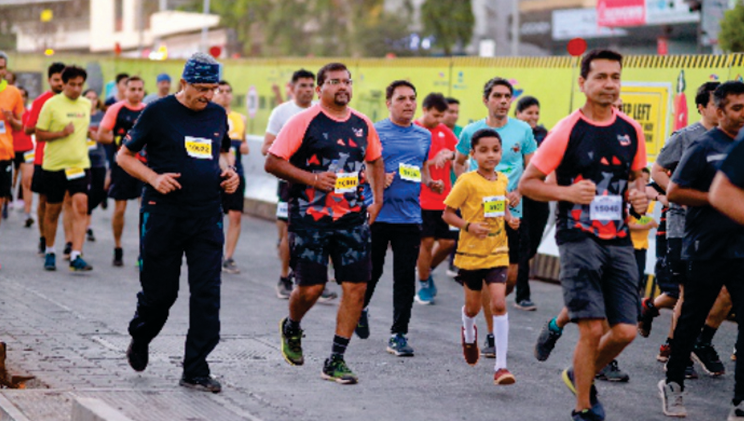
Public health is not only clinical; it is behavioural. To normalize fitness and make it a family habit, the Foundation organised programmes under banners such as “Fit Baner–Balewadi”, including a Family Run marathon and regular community fitness activities. These events were designed with clear objectives:
- Promote daily physical activity across age groups — children, parents and seniors.
- Create family-friendly events that make fitness social, fun, and repeatable.
- Pair exercise campaigns with health education — the benefits of aerobic activity, simple home-based exercises, and safe running practices.
These community-driven fitness activities were complemented by weekly yoga sessions, breathing and pranayama classes, and occasional Zumba and group-exercise meetups to keep motivation high.
Yoga Satra and Sustained Wellness Education
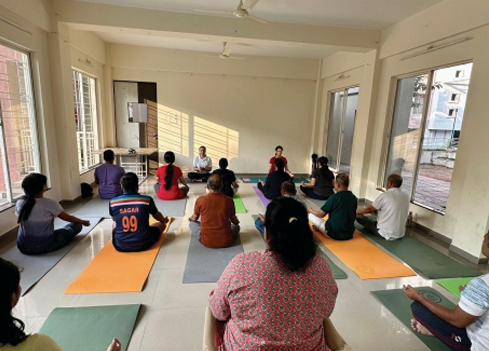
To foster long-term wellness habits, the Foundation ran a week-long Yoga Satra across residential societies, supported by partners like Yoga Vidya Dham. These sessions focused on:
- Teaching practical yoga postures and breathwork for day-to-day health.
- Building awareness about stress management and the role of routine in long-term wellbeing.
- Enabling continuity: many participants adopted daily yoga practice after the Satra, integrating it into their family routines.
The aim is to shift behaviour steadily, a small daily practice that over months yields improved health outcomes and resilience.
Partnerships and People Power: Doctors, Labs, Volunteers
None of this work is possible without a strong ecosystem of partners and volunteers. The Foundation thanks and collaborates with:
- Local doctors and specialists who donate time for camps and follow-up care.
- Pathology laboratories and diagnostic centres that provide testing support.
- Citizen groups, friends’ circles (mitramandali) and neighborhood associations that mobilise turnout and trust.
- Dedicated volunteers who manage logistics, registration and on-ground coordination.
This collaborative model professionals and citizens working together is the Foundation’s hallmark and what allows small interventions to scale into lasting programs.
Measurable Impact and Accountability
The Foundation believes in transparent, measurable community service. The programs are tracked not only by the number of camps and events but by lives touched people screened, units of blood collected, families participating in fitness initiatives, and hours of volunteer service donated. Counters on the website are used to showcase this quantitative impact, but the true measure remains the stories of individuals who accessed care earlier, avoided serious complications, or adopted healthier lifestyles because of these interventions.
How Residents Can Access Services or Join In
The Foundation’s health work is designed to be citizen-friendly:
- Attend screening camps when they are announced across local societies and social channels.
- Join fitness and yoga sessions: family-friendly events are open to all ages.
- Participate in blood donation drives: donors are welcome and appreciated.
- Volunteer: sign up through the volunteer form on the website if you can help with events, logistics, or outreach.
- Contact: reach out through the website’s WhatsApp button or contact form to request help, suggest a health need in your locality, or ask about upcoming camps.
The Road Ahead: A Vision for Healthier Neighbourhoods
Jayesh Murkute Social Foundation’s health agenda is not a series of one-off activities, it is a strategy to create sustained change:
- Scale preventive screening so that regular health checks become a social norm in every society.
- Deepen emergency readiness by strengthening first-response links between neighbourhood volunteers, ambulances and nearby clinics.
- Institutionalise fitness by embedding weekend yoga/pranayama and family fitness into community calendars.
- Focus on inclusion by tailoring outreach to the elderly, women, youth and marginalised groups.
- Strengthen data and follow-up so that screening leads to long-term care and measurable health outcomes.
The Foundation invites citizens, doctors, community groups and local administration to partner in making these goals a reality.
Conclusion: Health as a Collective Responsibility
A healthy community requires resources, organisation, and most importantly collective will. The Jayesh Murkute Social Foundation has been building that will by combining emergency support, preventive screening, community fitness and inclusive outreach. This is work that evolves with the community: small acts of care added every day build resilient families and a stronger neighbourhood.
If you would like to participate, volunteer, or suggest a neighbourhood that needs a health camp, please contact us via the website. Together we can build a healthier, more secure future for every citizen of our community.